What are the 3 most common types of hydraulic motors?

Hydraulic motors play a vital role in converting hydraulic energy into mechanical power across various industries. Among these, gear, piston, and vane motors dominate the market due to their performance and versatility. Piston motors, with a market share of 46.6%, excel in high torque tasks, while gear and vane motors cater to specific applications like construction and industrial machinery. The INM Series Hydraulic Motor exemplifies innovation, offering high efficiency and durability tailored for demanding environments. Additionally, the IMB Series Hydraulic Motor, IMC Series Hydraulic Motor, and IPM Series Hydraulic Motor also contribute to the diverse range of hydraulic solutions available, each designed to meet specific operational needs and enhance overall performance.
Key Takeaways
- Hydraulic motors change hydraulic energy into mechanical power. The most common types are gear, piston, and vane motors.
- Gear motors are small and work well. They are great for fast jobs in building and farming.
- Piston motors give strong power and work efficiently. They are best for tough jobs in Ships and Marine engineering.
Gear Hydraulic Motor

Working Principle
Gear hydraulic motors operate by utilizing the meshing of gears to convert hydraulic energy into mechanical motion. Hydraulic fluid enters the motor, creating pressure that drives the rotation of the gears. This rotation generates torque, which powers the connected machinery. The design allows for precise control of speed and torque, making it suitable for various applications.
| Parameter | Description |
|---|---|
| Tooth Geometry | Optimized tooth shapes reduce friction loss and facilitate fluid flow, enhancing system efficiency. |
| Material Selection | Use of alloy steel or high-strength composites ensures durability under wear and high stress. |
| Load Distribution | Proper load distribution on gear teeth prevents premature wear and mechanical failures. |
| Lubrication Channels | Advanced lube channel design minimizes wear and heat production, improving motor longevity. |
The compact design of gear hydraulic motors enables them to adjust shaft output speed effectively, catering to specific operational needs.
Advantages
Gear hydraulic motors offer several advantages:
- High Efficiency: Their ability to deliver consistent performance in demanding environments makes them a reliable choice.
- Compact Size: The small footprint allows for easy integration into machinery with limited space.
- Durability: High-strength materials and advanced lubrication systems ensure long-lasting performance.
- Versatility: These motors can operate efficiently at both high and low speeds, making them suitable for diverse applications.
The growing demand for energy-efficient hydraulic systems has further driven advancements in gear motor technology, enhancing their overall performance.
Common Applications
Gear hydraulic motors are widely used in industries requiring reliable and efficient power transmission. Common applications include:
- Construction Equipment: Excavators, loaders, and cranes rely on these motors for their compact size and high torque output.
- Agricultural Machinery: Tractors and harvesters benefit from their ability to handle heavy loads.
- Industrial Automation: Conveyor systems and robotic arms utilize gear motors for precise motion control.
Their robust design and adaptability make them indispensable in environments where performance and reliability are critical.
Piston Hydraulic Motor
Working Principle
Piston hydraulic motors operate by converting hydraulic energy into mechanical power through the movement of pistons within a cylinder block. As pressurized hydraulic fluid enters the motor, it pushes the pistons, creating rotational motion. This motion generates torque, which drives connected machinery. Axial-piston motors, a common type, excel in delivering high torque at low speeds, making them ideal for heavy-duty applications. Their efficiency remains consistent even during low-speed operations, ensuring reliable performance in demanding environments.
| Metric | Description |
|---|---|
| Displacement | Volume of fluid displaced by the piston per stroke, critical for motor capacity. |
| Pressure | Hydraulic fluid pressure that dictates the force generated, measured in megapascals (MPa). |
| Torque | Rotational force generated, directly related to displacement and pressure, measured in Nm. |
| Speed | Motor speed in RPM, influenced by pressure and displacement settings. |
Advantages
Piston hydraulic motors offer several key benefits:
- High Torque Output: These motors deliver exceptional torque, even at low shaft speeds, making them suitable for tasks requiring significant force.
- Efficiency: Their design ensures excellent performance during low-speed operations, reducing energy waste.
- Durability: High-quality materials and precise engineering contribute to a long operating life, justifying their initial investment.
- Versatility: They adapt well to various operating conditions, supporting a wide range of industrial applications.
The ability to maintain efficiency under heavy loads makes these motors a preferred choice for industries requiring reliable power transmission.
Common Applications
Piston hydraulic motors are widely used in sectors that demand robust and efficient power solutions.
- Manufacturing: These motors drive heavy machinery, ensuring smooth and precise operations.
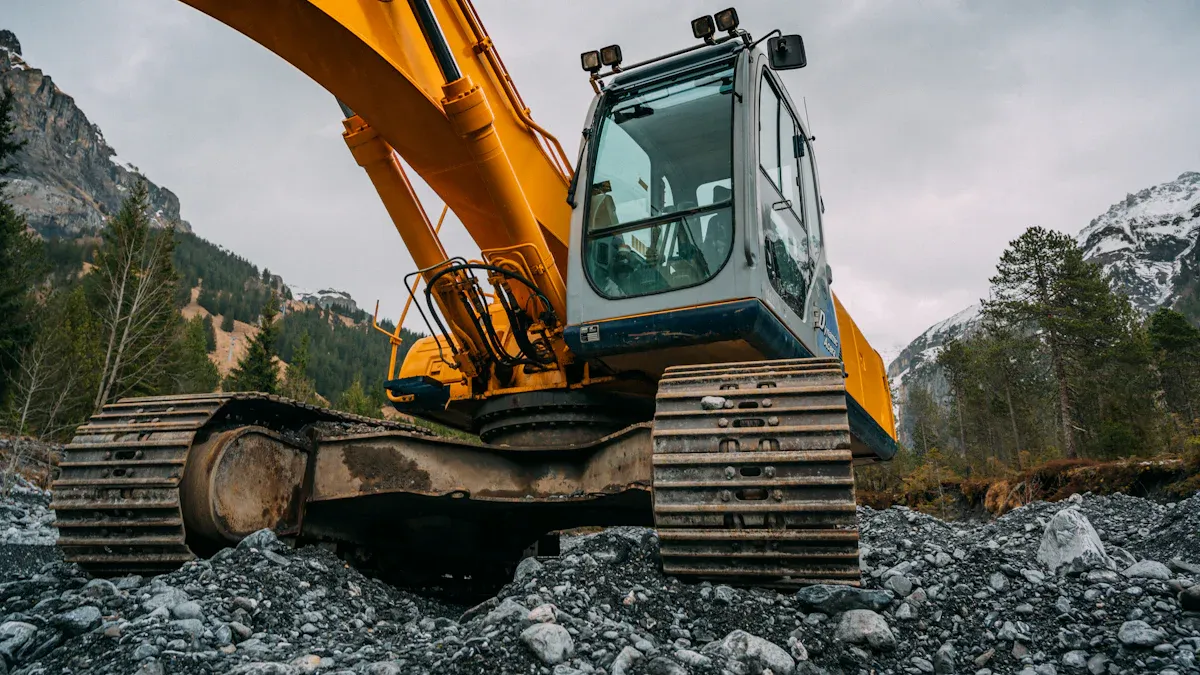
- Construction: Equipment like excavators and bulldozers rely on their high torque capabilities.
- Agriculture: Tractors and other farming equipment benefit from their ability to handle heavy loads.
- Mining: Their durability and efficiency make them indispensable in mining operations.
In 2023, the mining and construction sectors accounted for 37% of the market share for piston hydraulic motors, with projections indicating growth to 40% by 2032. This trend highlights their increasing importance in heavy-duty applications. Additionally, these motors generated $5.68 billion in revenue in 2023, with expectations to exceed $9.59 billion by 2032.
Vane Hydraulic Motor
Working Principle
Vane hydraulic motors operate by utilizing a rotor with sliding vanes housed within a cam ring. Pressurized hydraulic fluid enters the motor, forcing the vanes outward against the cam ring. This action creates a pressure differential that drives the rotor’s rotation, converting hydraulic energy into mechanical motion. The design ensures smooth and consistent torque output, even at low speeds.
- The installation of guide vanes in axial flow pumps can recycle 10–15.7% of the total energy from the impeller outlet, enhancing hydraulic performance.
- Efficiency improvements of up to 5% are observed when guide vanes are utilized compared to pumps without them.
- The design of guide vanes significantly affects the high-efficiency area of the pump, leading to better performance under design working conditions.
This principle allows vane motors to deliver reliable performance in applications requiring precise motion control and smooth operation.
Advantages
Vane hydraulic motors offer several notable benefits:
- Quiet Operation: Their design minimizes noise, making them ideal for environments where sound control is critical.
- Smooth Motion: Consistent torque output ensures seamless performance, particularly in low-speed tasks.
- Efficiency: The patented vane-crossing-vane design reduces torque ripple and enhances overall efficiency.
- Versatility: Features like bi-directional functionality and customizable output ports make them adaptable to various industrial needs.
| Feature | Specification |
|---|---|
| Displacement Range | 5 to 250 in.³/rev |
| Continuous Torque | 183 to 13,714 lb-ft |
| Pressure Ratings | 3000 psi continuous; 3500 psi intermittent; 4500 psi continuous (high-performance models) |
| Speed Range | 2000 rpm (smallest model) to 300 rpm (largest model) |
These advantages make vane motors a preferred choice for industries prioritizing efficiency and reliability.
Common Applications
Vane hydraulic motors excel in a variety of industrial applications:
- Industrial Machinery: Their quiet operation and smooth motion make them suitable for sensitive environments like manufacturing plants.
- Material Handling: Equipment such as conveyors and forklifts benefit from their consistent torque output.
- Construction Equipment: Their bi-rotational power converter design enhances performance in heavy-duty tasks.
- Marine Applications: The silent operation and high efficiency make them ideal for shipboard systems.
The MD4DC Vane Motor exemplifies this versatility, offering features like easily replaceable cartridges and a high power-to-weight ratio. These characteristics ensure optimal performance across diverse operational conditions.
Gear, piston, and vane hydraulic motors dominate the industry due to their unique advantages. Gear motors excel in compactness and efficiency, making them ideal for high-speed applications. Piston motors deliver high torque and efficiency, perfect for heavy-duty tasks. Vane motors ensure smooth operation and versatility, suitable for industrial machinery.
Selecting the right hydraulic motor depends on efficiency, load requirements, and operating conditions. For instance, gear motors handle up to 3000 psi, while piston motors exceed 5000 psi, offering unmatched performance for demanding applications.
| Motor Type | Pressure Handling | Flow Rates | Operational Efficiency |
|---|---|---|---|
| Gear | Up to 3000 psi | Low speed, high torque | Suitable for specific industry applications |
| Vane | Up to 2500 psi | 5 GPM to 200 GPM | High speeds up to 4000 RPM for mobile and industrial uses |
| Piston | Over 5000 psi | 10 to over 200 GPM | Excellent for accurate energy conversion and high performance |
Choosing the right motor ensures optimal performance and reliability across diverse industries.
FAQ
What factors should be considered when selecting a hydraulic motor?
Several factors influence the choice of a hydraulic motor:
- Load Requirements: Determine the torque and speed needed.
- Efficiency: Evaluate energy consumption and performance.
- Operating Conditions: Consider temperature, pressure, and environment.
Tip: Consult experts to match motor specifications with application needs.
How do hydraulic motors differ from hydraulic pumps?
Hydraulic motors convert hydraulic energy into mechanical motion, while hydraulic pumps do the reverse. Motors drive machinery, whereas pumps generate fluid flow within hydraulic systems.
Can hydraulic motors operate in both directions?
Yes, many hydraulic motors, such as vane motors, feature bi-directional functionality. This capability allows them to reverse rotation, enhancing versatility in industrial applications.
Note: Always verify the motor’s specifications for directional capabilities.