Durable Hydraulic Dual Winches for Middle East Shipbuilding and Marine Operations

Durable hydraulic dual winches play a vital role in Middle East shipbuilding and marine operations.
- Hydraulic winch systems use robust materials and advanced coatings to resist corrosion and heat.
- Sealed bearings and reinforced housings block sand and contaminants, extending equipment life and ensuring safe, efficient performance in demanding environments.
Key Takeaways
- Hydraulic dual winches use strong, corrosion-resistant materials and sealed parts to perform reliably in extreme heat, sand, and saltwater common in Middle East marine environments.
- These winches offer powerful, safe, and efficient operation with features like dual power sources, automation, and advanced controls that reduce downtime and protect equipment and crew.
- Regular inspection, cleaning, and maintenance, including fluid checks and lubrication, are essential to keep hydraulic winch systems running smoothly and extend their service life.
Hydraulic Winch Solutions for Middle East Marine Challenges

Performance in Extreme Heat, Sand, and Corrosive Conditions
Middle East marine environments present some of the toughest challenges for equipment. Temperatures often soar above 45°C, and sandstorms can strike without warning. Saltwater and humidity accelerate corrosion, threatening the longevity of machinery. Hydraulic winch systems stand out in these conditions. Manufacturers design them with corrosion-resistant materials and advanced sealing technologies. These features keep sand, dust, and water out of critical components. Operators rely on hydraulic winches because they deliver consistent power and torque, even when exposed to extreme heat or submerged in seawater.
Tip: Regular inspection and cleaning of winch surfaces help maintain peak performance in sandy and salty environments.
Hydraulic winch systems also use energy-efficient motors and noise reduction technologies. Many models now support biodegradable hydraulic fluids, which reduce environmental impact. These innovations align with growing sustainability goals in the region.
Operational Demands in Shipyards, Offshore Platforms, and Marine Vessels
Shipyards and offshore platforms in the Middle East face unique operational demands. They handle heavy loads, such as riser installation, mooring, and subsea equipment. The region’s shipyards construct, retrofit, and maintain large, complex vessels. Offshore platforms must comply with strict safety and regulatory standards. Hydraulic winch systems address these needs with advanced features and robust construction.
- Hydraulic winches provide superior load-handling capacity for large-scale projects.
- They operate reliably under high pressure and can withstand submersion.
- Advanced controls and safety interlocks ensure operator safety and regulatory compliance.
- Digital integration and automation support predictive maintenance and efficient operations.
- Hydraulic winch systems dominate heavy-duty marine sectors due to their strength and durability.
Marine vessels in the Persian Gulf and Red Sea benefit from precision-engineered winches. Features like integrated level wind, custom gearboxes, and advanced control systems improve rope management and synchronization. Hydraulic Power Units (HPUs) ensure smooth, efficient lifting and handling, which is critical for complex marine operations.
How Dual Hydraulic Winches Enhance Reliability and Efficiency
Dual hydraulic winch systems offer significant advantages over single winch setups. In the Arabian Gulf, industry standards require anchor winches to have dual independent power sources. This design increases system complexity but greatly improves reliability. Recent data from ADNOC offshore fields shows a 63% reduction in downtime incidents with dual hydraulic winch systems compared to single winch systems.
Dual winches enable synchronous lifting and lowering, which is vital for safe and efficient operations. Motion compensation and self-leveling features allow the system to adjust automatically during rough seas. Auto tension and shock absorption prevent rope snapping and equipment failure. These features protect both crew and machinery, reducing risks during demanding tasks.
Note: Computer-controlled dual winch systems ensure continuous operation, even during extended periods at sea.
Hydraulic winch systems also outperform electric winches in heavy-duty marine applications. They deliver greater pulling power and torque, operate continuously without overheating, and resist harsh conditions like high temperatures and abrasive sand. Maintenance best practices and real-time condition monitoring further enhance reliability and reduce downtime.
Engineering, Customization, and Maintenance of Hydraulic Winch Systems
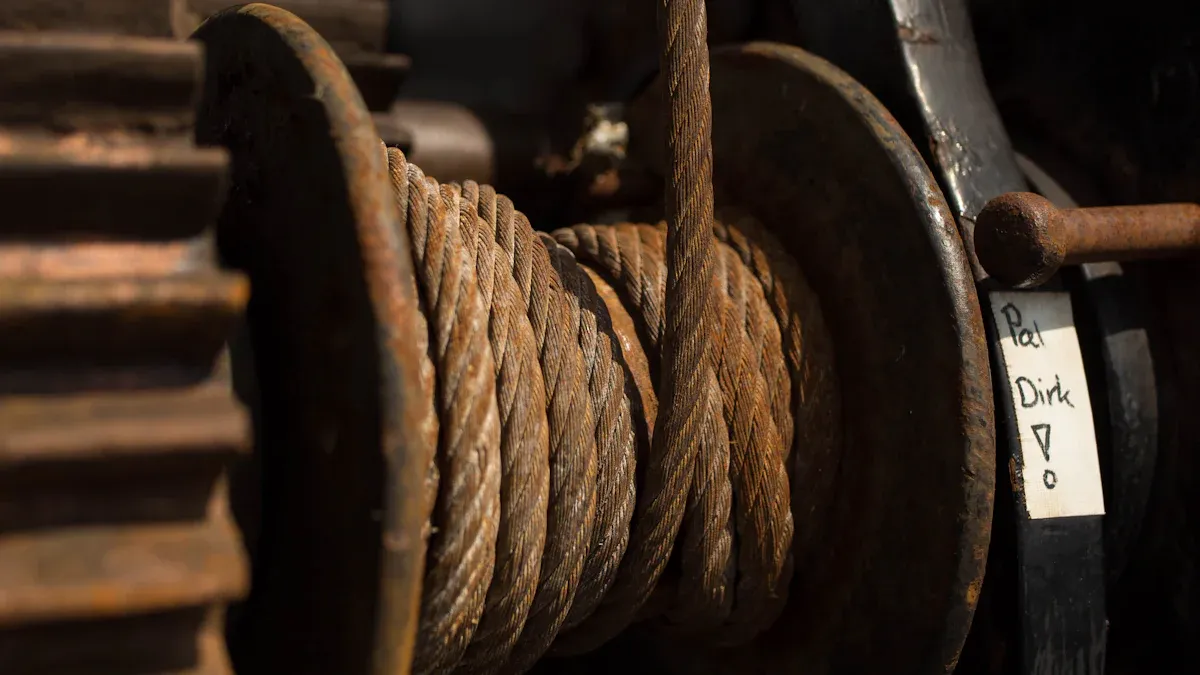
Key Features: Materials, Sealing, and Power Systems for Durability
Hydraulic winch systems in the Middle East must withstand high temperatures, abrasive sand, and corrosive saltwater. Engineers select materials and techniques that deliver strength and long-term reliability. The table below highlights the most common choices for marine environments:
| Material / Technique | Purpose / Benefit |
|---|---|
| High-strength steel | Maintains structure and resists heavy loads |
| Marine-grade alloys | Fights corrosion in saltwater and harsh conditions |
| Advanced composites | Reduces stress and boosts corrosion resistance |
| Protective coatings | Shields against salt, sand, and heat |
| Corrosion-resistant fasteners | Lowers corrosion risk and increases durability |
| Cathodic protection | Stops corrosion in submerged metal parts |
| Sealed bearings and housings | Blocks sand and water, reducing wear |
| Robust seals and hoses | Prevents leaks and keeps pressure stable |
Hydraulic winch systems also rely on advanced power configurations. These setups ensure smooth, powerful operation for heavy-duty marine tasks:
- A closed-loop hydraulic system uses a pump, hydromotor, valves, controls, and a fluid reservoir.
- The hydraulic pump connects to a vehicle’s PTO or an independent engine.
- This system delivers high torque and continuous-duty performance.
- Engineers match pump capacity to the winch’s hydromotor for efficiency.
- Corrosion-resistant parts and strong construction help the system last in harsh conditions.
- Regular maintenance, such as fluid checks and filter changes, keeps the system running well.
Hydraulic winch systems provide consistent power and high load capacity. These features make them ideal for towing, anchoring, and lifting in marine operations.
Customization Options for Specific Marine Applications
Every marine operation has unique needs. Manufacturers offer a wide range of customization options for hydraulic winch systems to meet these demands:
- Capacity scaling allows the winch to handle different load sizes.
- Engineers select drive types to match vessel or platform requirements.
- Automated control systems and remote operation improve safety and efficiency.
- Digital integration supports predictive maintenance and data analytics.
- Advanced materials boost performance in tough offshore environments.
- Modular designs make repairs and upgrades easier.
- Winch types, such as anchor handling, mooring, crane, or towing, are tailored for specific jobs.
- High-capacity winches, sometimes over 100 tonnes, support heavy-duty offshore work.
- Sustainable hydraulic fluids and eco-friendly designs help meet environmental rules.
The Middle East’s oil and gas sector drives demand for these custom solutions. Operators often choose intelligent systems that connect with digital platforms for better monitoring and control.
Installation and Commissioning Guidelines
Proper installation and commissioning ensure hydraulic winch systems perform safely and efficiently. Operators should follow these guidelines:
- Constantly monitor the winch during operation for any unusual sounds or movements.
- Prepare for emergencies by knowing how to shut down the winch and engage emergency brakes.
- After each use, release loads slowly, secure them, rewind cables neatly, and apply lubricant to prevent rust.
- Inspect the hydraulic system, drum, wire rope, brakes, clutches, and gears for wear or damage.
- Use the manufacturer’s recommended hydraulic oil, keep it clean, and change it as scheduled.
- Replace hydraulic filters regularly to avoid contamination.
- Lubricate all moving parts as directed, avoiding too much or too little.
- Check and replace seals to prevent leaks.
- Verify hydraulic pressure stays within safe limits.
- Address issues like slow operation, overheating, or unusual noises by checking the electrical supply, hydraulic levels, filters, and mechanical parts.
- Always consult the manufacturer’s manual or a professional for complex problems.
Tip: Ongoing training for maintenance teams helps keep systems running smoothly and safely.
Maintenance Strategies for Long-Term Reliability
Regular maintenance keeps hydraulic winch systems reliable in harsh marine environments. Operators should follow these strategies:
- Inspect the system every month for wear, damage, and hydraulic condition.
- Keep hydraulic fluid clean and change it as recommended.
- Replace filters often to prevent dirt buildup.
- Lubricate moving parts with marine-grade lubricants.
- Check and replace seals to stop leaks.
- Monitor hydraulic pressure to ensure proper function.
- After use, rewind the wire rope neatly and apply a light coat of lubricant.
Predictive maintenance uses real-time data, such as load tension and system temperature, to spot problems before they cause breakdowns. Integrated diagnostics and monitoring systems help maintenance teams act quickly. This approach reduces downtime and extends the life of the hydraulic winch system.
Note: Working with experienced marine hydraulic professionals ensures the best care and performance for winch systems.
Hydraulic winch systems deliver strong performance, safety, and reliability for Middle East shipbuilding.
- Operators benefit from robust corrosion resistance, low maintenance, and advanced safety features.
- Experts recommend evaluating total cost, supplier support, and customization options to maximize uptime and operational efficiency.
| Benefit | Impact |
|---|---|
| Durability | Handles harsh marine environments |
| Efficiency | Supports precise, safe lifting tasks |
FAQ
What makes hydraulic dual winches suitable for Middle East marine environments?
Hydraulic dual winches use corrosion-resistant materials and sealed components. These features protect against heat, sand, and saltwater. Operators trust them for reliable performance in harsh conditions.
How often should operators perform maintenance on hydraulic winch systems?
Operators should inspect and maintain hydraulic winch systems monthly. Regular checks help prevent breakdowns and extend equipment life.
Can hydraulic winches be customized for specific marine applications?
- Yes, manufacturers offer:
- Custom load capacities
- Specialized controls
- Modular designs
- Eco-friendly options
- Digital integration for monitoring and safety